A phone call from the Poblenou that's disappearing
A phone call from the Poblenou that's disappearing
YEAR
2026
team
ISABELLA SEHRINGER AND FEDERICA TOGNi
YEAR
2026
team
ISABELLA SEHRINGER AND FEDERICA TOGNi
Problem
How might collective memory stay visible in a neighborhood being rewritten in real time?
How might collective memory stay visible in a neighborhood being rewritten in real time?
From New York to Shanghai, Singapore to Bali - big cities around the world are shedding their past for a shinier version of the future, just like in Poblenou, Barcelona. Once known for its textile production, the neighborhood is now a hub for technology, tourism, and new development. That development marks economic growth - yet constant redevelopment also means displacement. So where does Poblenou's collective memory go? And how can we preserve and share these stories when the very people who remember them are being pushed out?
From New York to Shanghai, Singapore to Bali - big cities around the world are shedding their past for a shinier version of the future, just like in Poblenou, Barcelona. This development marks economic growth - yet constant redevelopment also means displacement.
So where does Poblenou's collective memory go? And how can we preserve and share these stories when the very people who remember them are being pushed out?
solution
In order to preserve and share the memories, it must be told from those who lived it
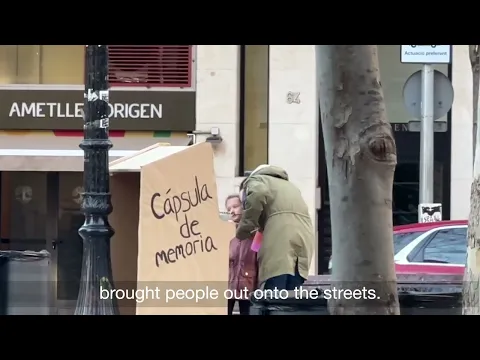
An audio was recorded with a staff member from the Arxiu Històric del Poblenou and installed inside a phone booth (Càpsula de Memòria). It was placed on Rambla del Poblenou for approximately 30 minutes, and people of all ages picked up the call and listened to the story of Poblenou.

Solution
In order to preserve and share the memories, it must be told from those who lived it
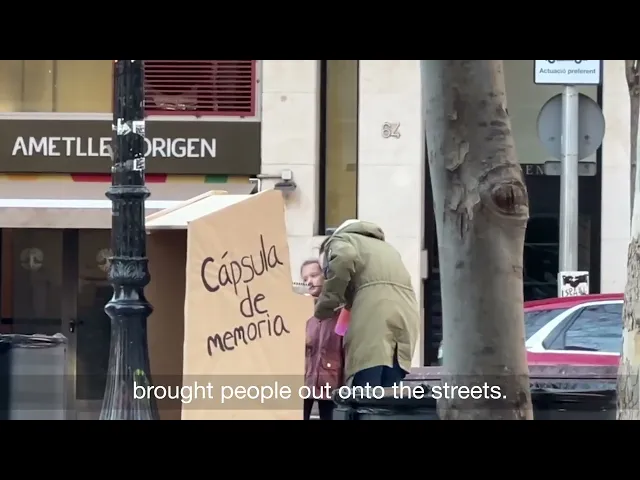
An audio was recorded with a staff member from the Arxiu Històric del Poblenou and installed inside a phone booth (Càpsula de Memòria). It was placed on Rambla del Poblenou for approximately 30 minutes, and people of all ages picked up the call and listened to the story of Poblenou.


Impact
Not once in those 30 minutes did the phone sit unanswered
At one point, a queue formed. Some even took pictures with the booth. For the length of one phone call, an older resident who remembers Poblenou before its transformation and a tourist are listening to the same street's memory - a story that otherwise would go unheard. This project is an act of resistance: an invitation for residents, tourists, students, and workers to slow down and listen to the stories of the neighborhood.
From this, Arxiu Històric del Poblenou reached out to extend the installation into its 50th anniversary celebration in December.
Research
CONTEXT
A walk with a former Poblenou resident reveals that he finds nothing of the neighborhood he once knew. Once known as "Catalan Manchester" - the most important industrial centre known for its textile production - Poblenou now carries a new title: "The Silicon Valley of Barcelona." A new business hub, hip cafés, wine bars, and easy access to the beach have drawn a significant rise in population. From 32,478 workers, that number is projected to reach 150,000 by 2027. Living in Poblenou now seems to exude the air of cultural capital.
A walk with a former Poblenou resident reveals that he finds nothing of the neighborhood he once knew. Once known as the most important industrial centre known for its textile production - Poblenou is now a new business hub, hip cafés, wine bars, and easy access to the beach have drawn a significant rise in population.

In Naked City, Sharon Zukin argues that cities manufacture a sense of authenticity by distilling value from their own origins - turning a place's history into an aesthetic that can be branded and sold, even as the people who lived that history are pushed out. Sociologist Pierre Bourdieu's idea of aspirational consumption explains what happens next: once authenticity is manufactured, newcomers consume a neighborhood's history as taste, a marker of distinction, without inheriting the lived experience that made it authentic in the first place.
Is it still possible, then, to preserve and share the collective memory a neighborhood was built on, amid the rapid displacement and redevelopment?
Design Process
Oral history is one of the most powerful tool for igniting collective memory, and Arxiu Històric del Poblenou has plenty of stories that can be told. Inspired by 'We're not really strangers' phone installation in New York, we decided to create a phone booth. Coincidentally, the first public phone booth in Barcelona was installed in the Poblenou neighborhood around 1964.
In Naked City, Sharon Zukin argues that cities manufacture a sense of authenticity by distilling value from their own origins - turning a place's history into an aesthetic that can be branded and sold, even as the people who lived that history are pushed out.
Sociologist Pierre Bourdieu's idea of aspirational consumption explains what happens next: once authenticity is manufactured, newcomers consume a neighborhood's history as taste, a marker of distinction, without inheriting the lived experience that made it authentic in the first place.
Is it still possible, then, to preserve and share the collective memory a neighborhood was built on, amid the rapid displacement and redevelopment?


We repurposed a stand, painted it to match the original phone booth's colour, and used laser cutting for the rest. The aesthetic and construction reflects the neighborhood’s history while remaining accessible and durable in public space. Having three language options was an important feature so the story could reach everyone now sharing Poblenou's streets; long-time residents and newcomers alike. The prototype was built entirely by hand, hand-painted, hand-assembled, and rolled into Rambla de Poblenou.
IMPACT
Not once in those 30 minutes did the phone sit unanswered
At one point, a queue formed. Some even took pictures with the booth. This project is an act of resistance: an invitation for residents, tourists, students, and workers to slow down and listen to the stories of the neighborhood.
From this, Arxiu Històric del Poblenou reached out to extend the installation into its 50th anniversary celebration in December.
Reflection
DESIGN PROCESS
This project reshaped how I think about the value of prototyping early in social design and how it can test ideas whether we're getting it right or not. Moreover, the response taught me that people do care about collective memory of a neighborhood, and they don't need to be convinced to care about a disappearing place; they just need to be given a way to participate in remembering it - and in remembering, the stories stay alive.
Oral history is one of the most powerful tool for igniting collective memory, and Arxiu Històric del Poblenou has plenty of stories that can be told. Inspired by 'We're not really strangers' phone installation in New York, we decided to create a phone booth. Coincidentally, the first public phone booth in Barcelona was installed in the Poblenou neighborhood around 1964.
impact
Not once in those 30 minutes did the phone sit unanswered
At one point, a queue formed. Some even took pictures with the booth. For the length of one phone call, an older resident who remembers Poblenou before its transformation and a tourist are listening to the same street's memory - a story that otherwise would go unheard. This project is an act of resistance: an invitation for residents, tourists, students, and workers to slow down and listen to the stories of the neighborhood.
From this, Arxiu Històric del Poblenou reached out to extend the installation into its 50th anniversary celebration in December.

We repurposed a stand, painted it to match the original phone booth's colour, and used laser cutting for the rest.
The aesthetic and construction reflects the neighborhood’s history while remaining accessible and durable in public space. Having three language options was an important feature so the story could reach everyone now sharing Poblenou's streets; long-time residents and newcomers alike. The prototype was built entirely by hand, hand-painted, hand-assembled, and rolled into Rambla de Poblenou.
reflection
This project reshaped how I think about the value of prototyping early in social design and how it can test ideas whether we're getting it right or not.
Moreover, the response taught me that people do care about collective memory of a neighborhood, and they don't need to be convinced to care about a disappearing place; they just need to be given a way to participate in remembering it - and in remembering, the stories stay alive.

us behind the scenes


us behind the scenes
RESEARCH
CONTEXT
A walk with a former Poblenou resident reveals that he finds nothing of the neighborhood he once knew. Once known as "Catalan Manchester" - the most important industrial centre known for its textile production - Poblenou now carries a new title: "The Silicon Valley of Barcelona." A new business hub, hip cafés, wine bars, and easy access to the beach have drawn a significant rise in population. From 32,478 workers, that number is projected to reach 150,000 by 2027. Living in Poblenou now seems to exude the air of cultural capital.
In Naked City, Sharon Zukin argues that cities manufacture a sense of authenticity by distilling value from their own origins - turning a place's history into an aesthetic that can be branded and sold, even as the people who lived that history are pushed out. Sociologist Pierre Bourdieu's idea of aspirational consumption explains what happens next: once authenticity is manufactured, newcomers consume a neighborhood's history as taste, a marker of distinction, without inheriting the lived experience that made it authentic in the first place.
Is it still possible, then, to preserve and share the collective memory a neighborhood was built on, amid the rapid displacement and redevelopment?
Oral history is one of the most powerful tool for igniting collective memory, and Arxiu Històric del Poblenou has plenty of stories that can be told. Inspired by 'We're not really strangers' phone installation in New York, we decided to create a phone booth. Coincidentally, the first public phone booth in Barcelona was installed in the Poblenou neighborhood around 1964.
design process
We repurposed a stand, painted it to match the original phone booth's colour, and used laser cutting for the rest. The aesthetic and construction reflects the neighborhood’s history while remaining accessible and durable in public space. Having three language options was an important feature so the story could reach everyone now sharing Poblenou's streets; long-time residents and newcomers alike. The prototype was built entirely by hand, hand-painted, hand-assembled, and rolled into Rambla de Poblenou.
This project reshaped how I think about the value of prototyping early in social design and how it can test ideas whether we're getting it right or not. Moreover, the response taught me that people do care about collective memory of a neighborhood, and they don't need to be convinced to care about a disappearing place; they just need to be given a way to participate in remembering it - and in remembering, the stories stay alive.
reflection
us behind the scenes